


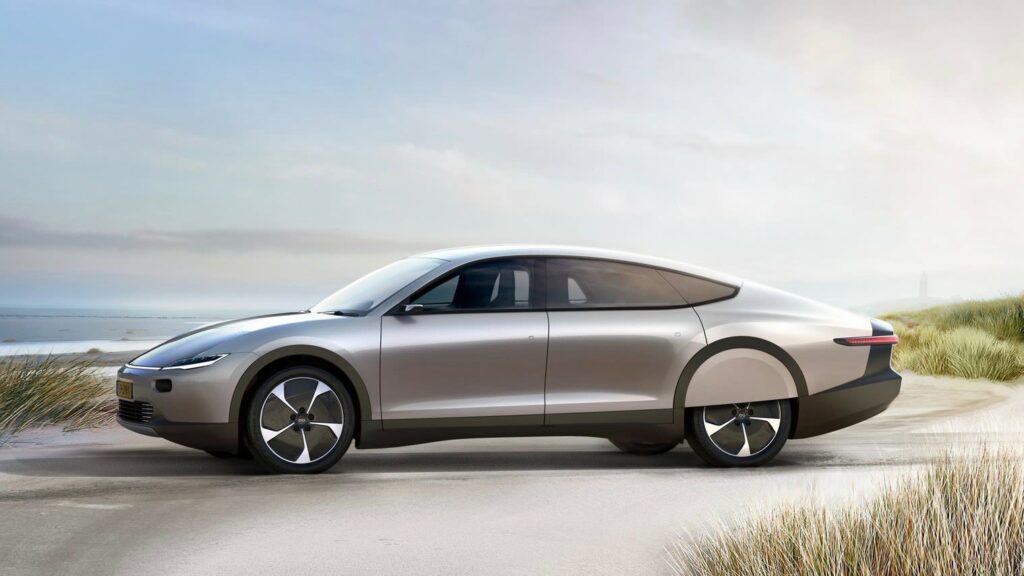
First revealed three years ago, the Lightyear 0 has been officially launched and the solar-powered EV is set to go into production in 2022. Not much has changed compared to the prototype vehicle shown off in 2019, keeping its ultra-sleek design to assist with aerodynamics. The Lightyear 0 is essentially an unconventional hybrid – it has a traditional EV motor and 60kWh battery pack, mated to solar panels that will extend its range.
Read: First HTC phone in years launching on June 28th?
The solar panels will automatically charge the car when exposed to the sun, whether it is turned off or on the roads. Calling it solar-powered is perhaps a bit of a stretch, as the solar panels simply assist the traditional EV battery pack to retain and extend its charge. In order to drive longer distances, it will definitely need to be topped up at a charging station.
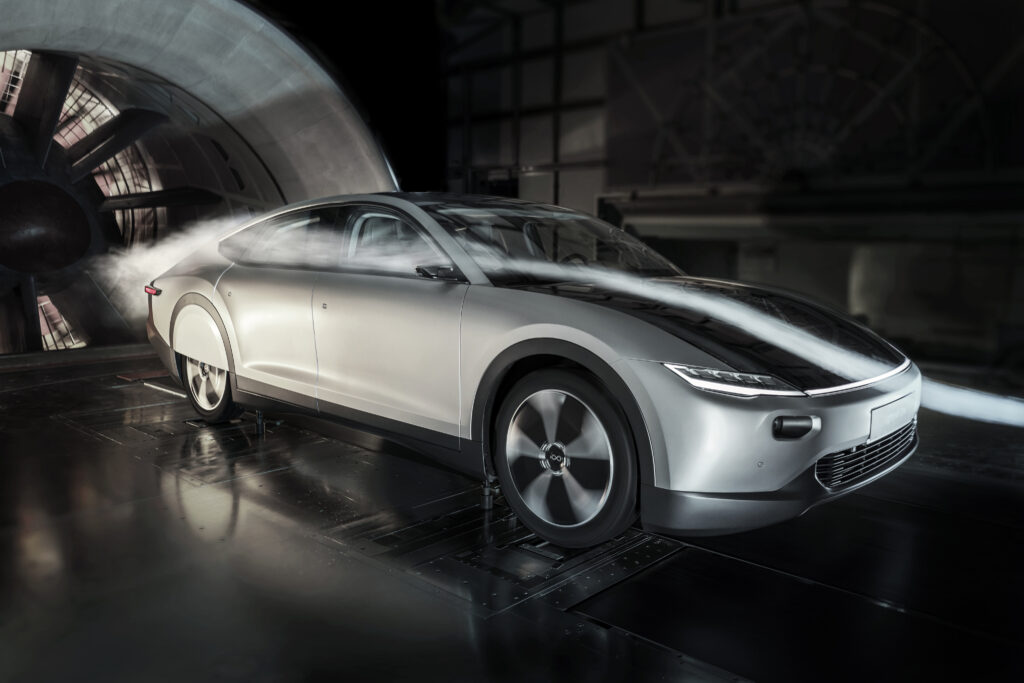
The Lightyear 0 solar panels can provide an additional 70 kilometres of range per day in a sunny climate, with the normal EV range being about 600 kilometres. That means for most people with shorter daily commutes, they might never need to plug in the vehicle to charge. This is projected to extend the battery’s lifespan as well, lessening maintenance and running costs even further.
That being said, drivers of the Lightyear 0 will have to drive it for a long time to recoup costs on aforementioned savings, because it isn’t cheap. The Lightyear 0 will cost €250,000 and the company will only build 946 of them. The idea is to sell a good amount of units of a more expensive vehicle in order to prove the technology, get more investment and ramp up production of an upcoming cheaper model (exactly what Tesla did with the original Roadster). The company has revealed that it plans to build a $33,000 solar-powered car, which is meant to go into production in 2025.
So why is it called Lightyear 0? The automotive industry needs to change its course. Every year, all cars drive 9,460,000,000,000 fossil-fuelled kilometres. That’s a lot. In fact, it’s a light-year. It’s our goal to have the world drive one light-year on solar power by 2035.

Lex Hoefsloot, Co-founder and CEO, explains: “electric cars are a step in the right direction, but they have a scaling problem. By 2030, we can expect 84 million electric vehicles (EVs) on roads in Europe alone.
“There’s no hiding from it, access to charging stations will not keep up with the demand for electric cars. To minimise plug-charging and maximise range, the industry’s strategy, so far, has been to add batteries. That increases the carbon footprint of production and, in turn, boosts weight and the need for high-power charging stations.
“Our strategy flips that approach. Lightyear 0 delivers more range with less battery, reducing weight and CO₂ emissions per vehicle.”
