


Meta Chief Executive Officer Mark Zuckerberg has officially revealed the Meta VR Glasses at the company’s annual Connect event, targeting a Q2 2027 commercial release. Priced at $1,300, the device adopts a lightweight, sunglasses-style form factor paired with a tethered external compute and battery pod. The architecture aims to deliver high-end spatial computing capabilities similar to Apple’s Vision Pro at a significantly lower price point and a drastically reduced weight profile.
Read: Huawei FreeBuds SE 4 ANC Review: Best budget buy?
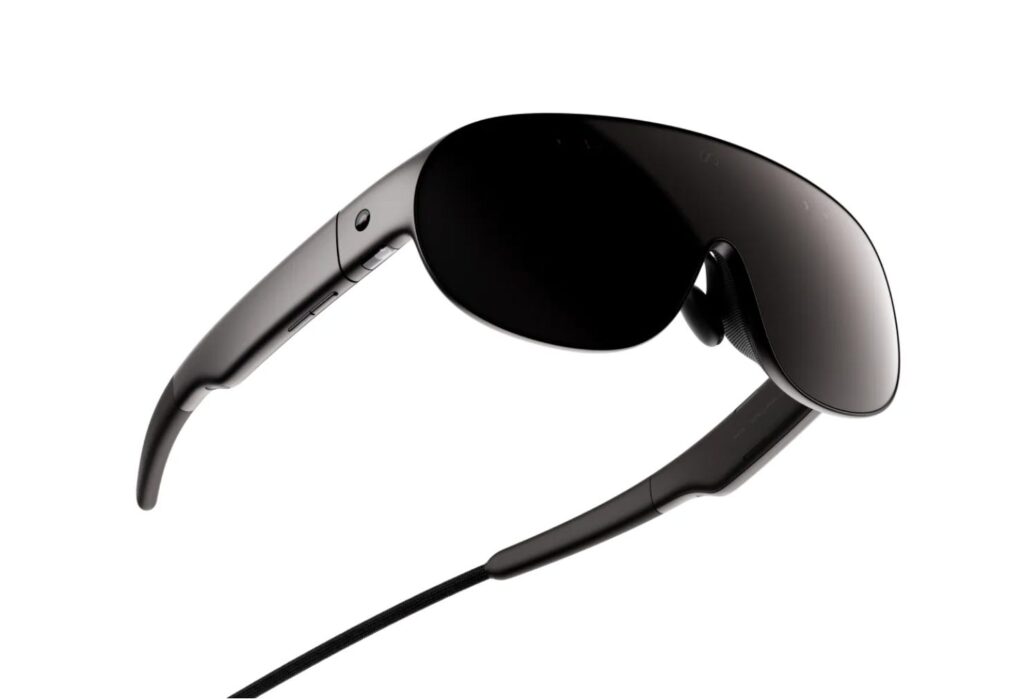
The standalone glasses weigh 100 grams, making them dramatically lighter than conventional virtual reality headsets and comparable to display frames from competitors like Xreal. The external pocket-sized compute puck adds an additional 300 grams, housing the main battery, system memory, and storage expansion. While the compact frame cannot be worn directly over prescription eyewear, Meta will offer custom optical inserts. Front-facing sensors handle spatial tracking and hand-gesture recognition, eliminating the need for mandatory physical controllers while maintaining an unobtrusive aesthetic suitable for travel and everyday use.
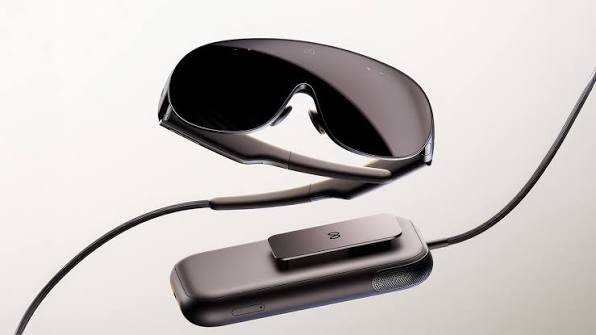
At the core of the system is Qualcomm’s Snapdragon Reality Elite processor (XR2 Gen 3), paired with 12GB of RAM, 128GB of internal storage, and a microSD slot for expandable local media. The optical stack features dual 5K micro-OLED displays outputting 2,412 by 2,288 pixels per eye at a 120Hz refresh rate. Six external cameras manage full colour passthrough and spatial motion tracking, while four internal sensors handle eye tracking and iris biometric authentication. The hardware offers a 70-degree horizontal field of view, trading the maximum visual immersion of heavier headsets for superior portability and wearing comfort.
Operating on Quest OS, the user interface relies on intuitive hand-gesture navigation alongside biometric iris login and personalized digital avatar creation for virtual communication. For enterprise and productivity tasks, the platform supports multi-window virtual desktop environments. Gaming capabilities include over 75 launch titles designed specifically for hand tracking, alongside backward compatibility with existing Quest VR titles when paired with Meta’s optional Touch Plus controllers.

Media consumption serves as a major focus for the platform. The Meta VR Glasses will launch with a dedicated 3D movie storefront alongside spatial streaming integration across platforms like Disney+ and Peacock. Meta is also introducing a “VR Enhanced Cinema” playback format that projects ambient lighting effects beyond the virtual screen into the user’s physical environment. Furthermore, National Geographic is developing a dedicated application featuring high-resolution 180-degree 3D spatial video experiences.
The $1,300 Meta VR Glasses position the hardware directly between consumer display glasses and high-end headsets like the Apple Vision Pro and the $1,050 Steam Frame. While Apple continues to navigate executive shifts under CEO John Ternus alongside adoption hurdles for its flagship spatial computer, Meta’s lighter, sub-$1,500 form factor presents a more practical alternative for mobile productivity and media playback. Despite lingering consumer sensitivity regarding public camera usage, Meta’s hardware represents a significant step toward practical, lightweight spatial eyewear.
