

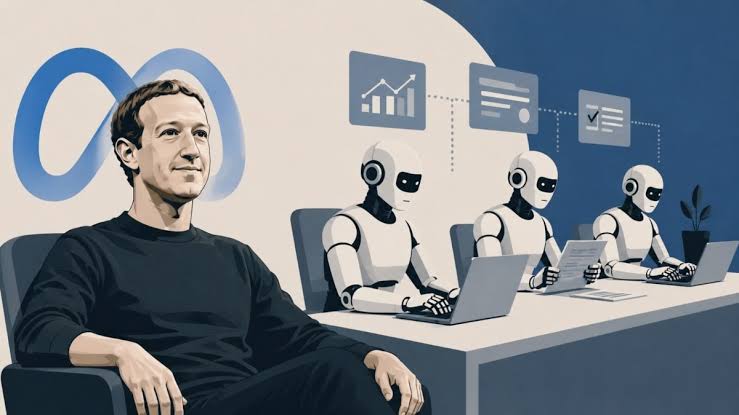
Meta Platforms CEO Mark Zuckerberg has publicly rejected calls for a coordinated industry-wide slowdown in artificial intelligence development, arguing that free-market competition and corporate liability give AI firms compelling reasons to act independently on safety. In a statement published on social platform X, Zuckerberg asserted that every artificial intelligence lab possesses the sole responsibility and commercial incentive to train its models safely, maintaining that internal alignment and user trust represent key product differentiators rather than justifications for collective deceleration.
Read: This is what the iPhone 18 Pro series costs in South Africa
Zuckerberg’s remarks highlight a widening rift among technology executives and government regulators regarding how to address warnings that advanced artificial intelligence is progressing beyond control. His stance directly breaks from Anthropic Chief Executive Dario Amodei, who recently urged rival AI developers to slow the pace of capability enhancements, specifically surrounding recursive self-improvement, to mitigate existential risks. Amodei’s proposal for coordinated restraint quickly received public endorsements from OpenAI Chief Executive Sam Altman and xAI founder Elon Musk.
However, the push for industry-wide coordination faces significant political and economic pushback. US President Donald Trump recently downplayed warnings regarding potential technological harm, arguing that existing federal guardrails are sufficient and cautioning that casting doubt on domestic AI development plays directly into the hands of foreign competitors, particularly China. That competitive perspective is shared widely across the semiconductor and hardware sectors, with executives such as Nvidia Chief Executive Jensen Huang warning that artificial development limits could compromise American technological leadership.

Positioning Meta’s operational strategy as a model for independent safety management, Zuckerberg emphasized that Meta Superintelligence Labs dedicates the majority of its computational infrastructure toward consumer-facing products rather than self-improving autonomous architectures. He highlighted Meta’s decision earlier this year to unilaterally delay the release of its Muse AI agent for security enhancements, arguing that labs can implement rigorous internal safeguards and independent third-party evaluations without requiring industry consensus or regulatory cartels.
The prospect of coordinated safety measures has also raised immediate concerns among antitrust enforcement agencies. US Federal Trade Commission Chairman Andrew Ferguson cautioned that regulators should remain deeply sceptical of tech firms seeking antitrust exemptions while lobbying for regulatory frameworks, targeting requests like Anthropic’s proposal for legal permission to coordinate safety-driven development limits among competitors. Meanwhile, Zuckerberg’s public focus on safety governance arrives as Meta seeks to reinforce its corporate accountability following an $18-billion legal settlement resolving state-level lawsuits over youth engagement on its primary social platforms.
