

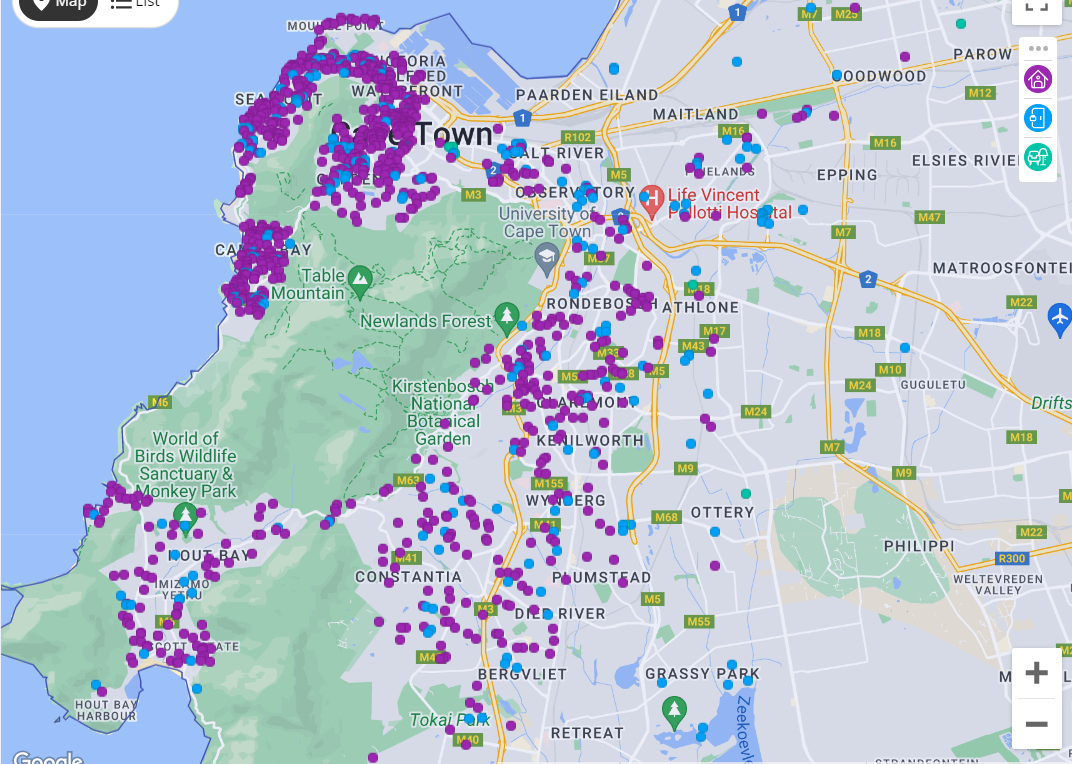
Cape Town residents are increasingly frustrated with the lack of government regulations on Airbnb, as many find it increasingly difficult to afford living in the city, according to the Sunday Times. Cape Town boasts one of the highest numbers of Airbnb listings globally, which, while beneficial for tourism, significantly impacts the affordability of local housing.
Read: Bandwidth Blog & Smile 90.4FM Tech Tuesday: ChatGPT and AI ethics!
The Tourism White Paper emphasizes the need for appropriate regulation of short-term rentals, including strict limits on the duration of stays, a stance that Airbnb supports. Velma Corcoran, Airbnb’s regional lead for the Middle East and Africa, stated in a November interview, “We actually believe regulation, if it’s simple, appropriate, and proportionate, can be a really good thing.” She noted, however, that there was no current evidence suggesting South Africa faced the same housing crisis or overtourism issues as other countries that have introduced regulations.
Despite this, the Sunday Times reports that short-term rentals in Cape Town can cost between R3,000 and R4,000 per day during peak season and up to R200,000 for two months. This, combined with investors purchasing properties for the short-term rental market, has driven up property and rental costs, making it challenging for locals to compete.
Urban policy researcher Nick Budlender noted that the increasing property costs are threatening efforts to expand affordable housing in Cape Town. Even relatively well-off residents find themselves “priced out” due to the lack of affordable options.
Tourism Minister Patricia De Lille stated that feedback on the white paper would be collated and incorporated before being presented to President Cyril Ramaphosa’s cabinet. Airbnb has already signed a memorandum of understanding with the Department of Tourism to collaborate on a national registration system for short-term rentals, aiming to provide transparency and data to develop appropriate regulations.

Corcoran indicated that now is the right time to introduce new rules for short-term rentals in South Africa. These regulations should enable ordinary South Africans to host guests and earn extra income while imposing stricter measures on more professional operators or “bad actors.” She also questioned whether existing tourism regulations should be simplified, noting that platforms like Airbnb reduce the need for extensive regulation due to their built-in review systems.
The Department of Tourism announced its intention to regulate Airbnb and other home-sharing apps in April 2019 through the Tourism Amendment Bill, following a call for urgent regulation by the Federated Hospitality Association of South Africa (FEDHASA) in 2017. A green paper on tourism development and promotion was published in October 2023, outlining a policy review process to inform the Bill’s regulations.
FEDHASA supports a balanced regulatory approach that protects consumers and encourages entrepreneurship but cautioned against onerous requirements that could hinder smaller operators in poorer communities. “As these platforms are now a substantial part of the tourism sector, we support a balanced approach that protects consumers while encouraging entrepreneurship,” FEDHASA stated, advocating for regulations aligned with international best practices.
