

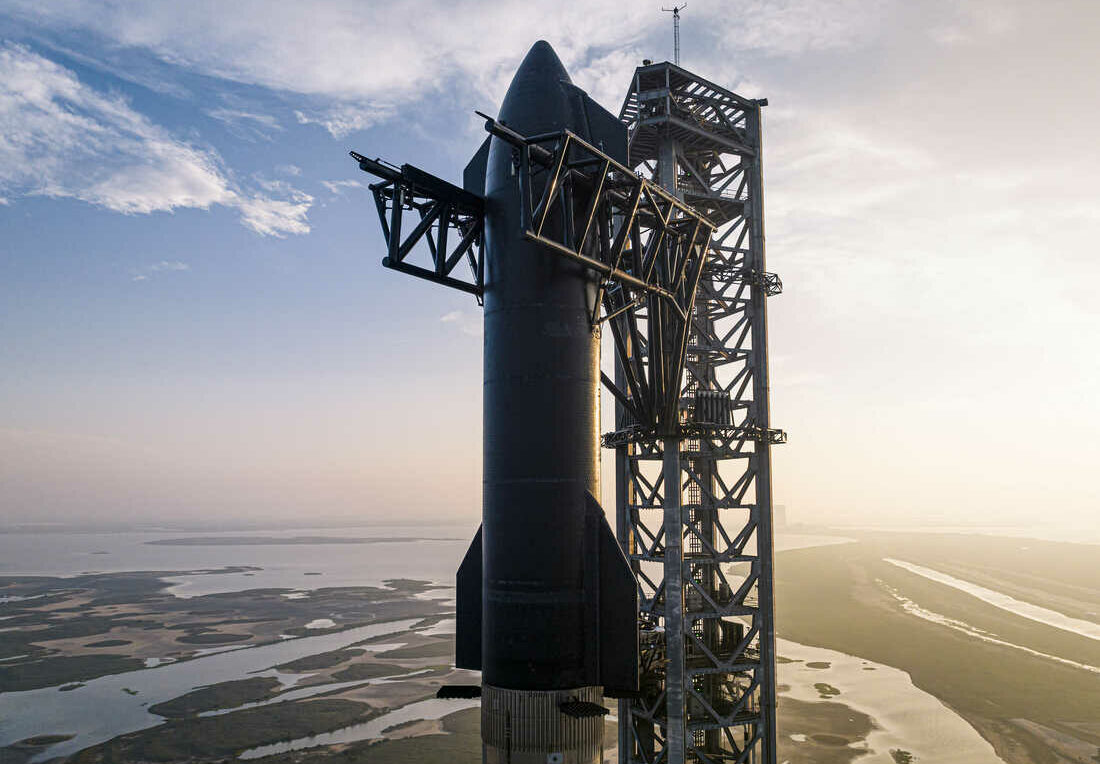
SpaceX’s attempt to send its Starship system into space on Thursday ended in a blast due to an engine failure, which forced the rocket to blow up shortly after lift-off. The incident is a setback for the company’s CEO Elon Musk’s goal to send humans back to the Moon and to deep-space destinations such as Mars.
Read: Google’s Bard AI is “worse than useless”, according to Google employees
The mishap happened just under four minutes after Starship lifted off from the company’s facility in Boca Chica, Texas. The company said it blew up Starship and its Super Heavy booster after they failed to separate, citing problems with some of Starship’s 33 engines. The explosion happened at 29 kilometres, after the rocket had climbed to a peak altitude of 39 kilometres over the Gulf of Mexico, not far from Boca Chica.
“The vehicle experienced multiple engines out during the flight test, lost altitude, and began to tumble,” SpaceX said in a statement. “The flight termination system was commanded on both the booster and ship.” The launch was a crucial one for Starship, the largest rocket ever built, and meant to show that the vehicle could reach space and complete a partial orbit of Earth. The mishap also drew attention from the US Federal Aviation Administration, which said it will look into the flawed launch.

The FAA, which regulates commercial space launches, said on Thursday afternoon that it would oversee an investigation of the rocket failure. The agency is responsible for ensuring uninvolved people and property aren’t damaged during such launches. “A return to flight of the Starship/Super Heavy vehicle is based on the FAA determining that any system, process, or procedure related to the mishap does not affect public safety,” it said in an emailed statement.
Despite the setback, Musk remains optimistic about the program’s progress. “I don’t want to jinx it, but I think we are highly likely to reach orbit this year and recover the booster and ship, if not this year, certainly next year,” Musk said in an internal email seen by Bloomberg. “Mars, here we come!” Starship was conceived to bring people, including Nasa astronauts, and cargo such as satellites into Earth’s orbit and beyond. The rocket is more powerful than any previous crewed spacecraft and taller than the Saturn V, which took humans to the Moon.
