

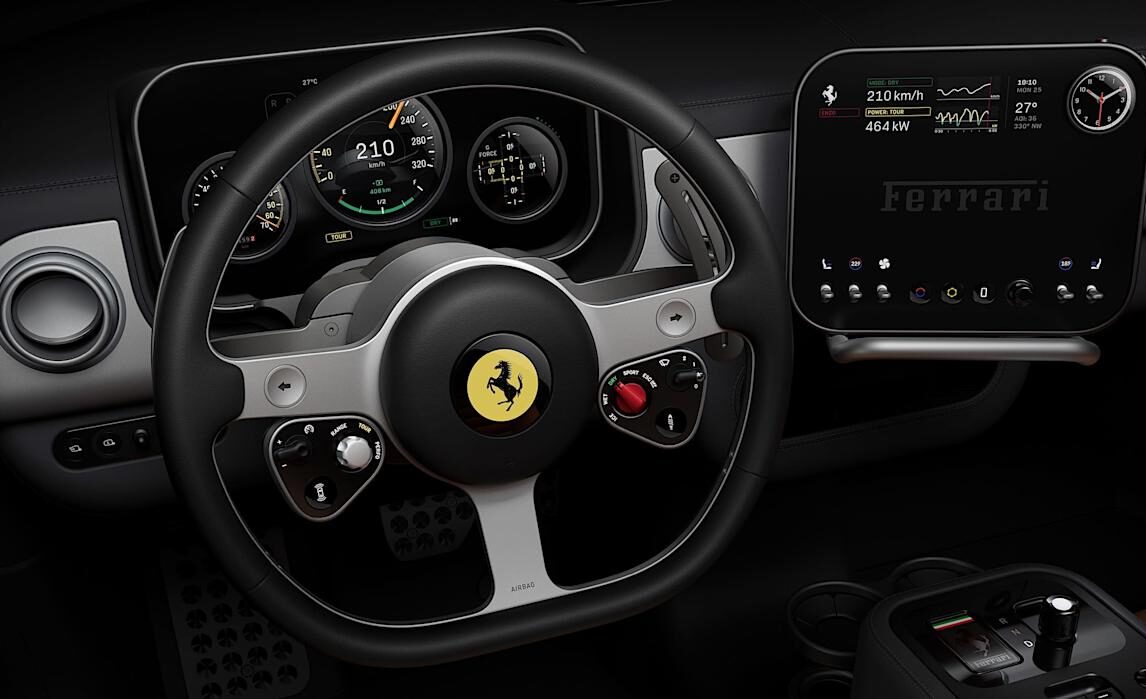
With the cancellation of Apple’s long-rumoured “Project Titan,” the automotive world was left to speculate on how a vehicle designed by Sir Jony Ive might have manifested. That curiosity has finally met its match in the Ferrari Luce, the official name for the high-performance EV previously known as the Elettrica. This machine represents a historic milestone for the Maranello-based manufacturer: its first foray into fully electric propulsion after over a decade of hybrid experimentation beginning with the 2013 LaFerrari.
Read: Samsung confirms the Galaxy S26 launch event date
The Luce is not merely a Ferrari with a battery; it is a profound collaboration between the Italian marque and LoveFrom, the design firm founded by Ive after his departure from Apple in 2019. Now an OpenAI subsidiary following a $6.5 billion acquisition in 2025, LoveFrom’s 60-person team has applied an obsessive level of detail to the Luce’s interior, creating a cabin that feels both familiar to Apple loyalists and revolutionary for automotive enthusiasts.
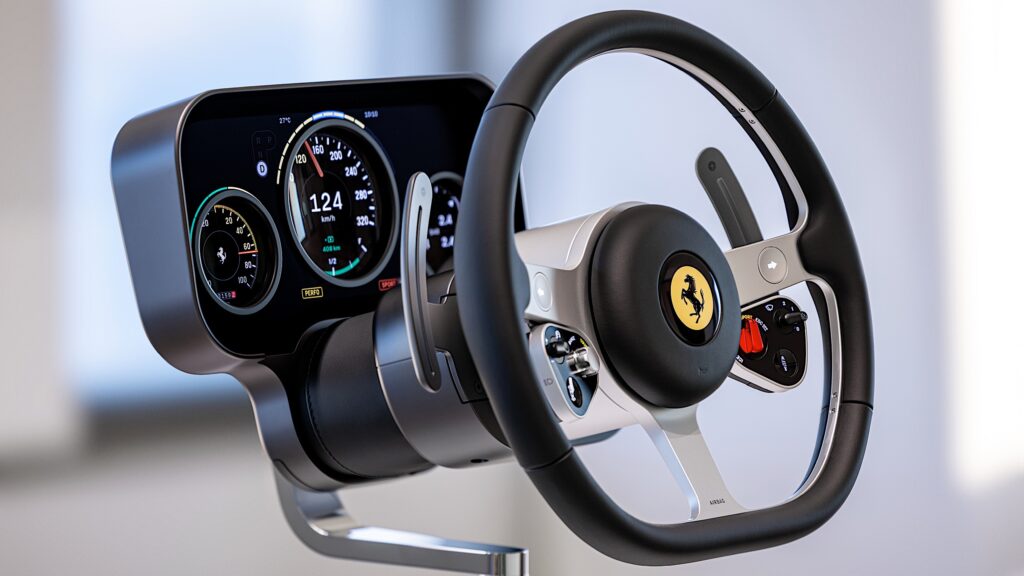
The aesthetic language of the Luce is unmistakably influenced by Ive’s tenure at Apple, particularly the era of the iPhone 4. The interior is a landscape of “squircles” and circles, characterized by absolute symmetry and minute perfection. While the initial impression may lean toward the clinical, the design reveals a deep sense of charm through its tactile interactions.
Materiality plays a central role in this experience. The cockpit features approximately 40 pieces of Corning Gorilla Glass, used for everything from the shifter surround to the convex lenses of the gauge cluster. This is complemented by anodized aluminium, available in grey, dark grey, and rose gold—a palette that reinforces the connection to high-end consumer electronics.
The vehicle’s key serves as a primary example of this “life-cycle” design philosophy. It features a yellow panel with an E Ink background. When placed into a magnetized receiver in the centre console, the yellow hue dims on the key and appears to flow into the glass shifter, symbolizing a transference of energy and life to the vehicle.
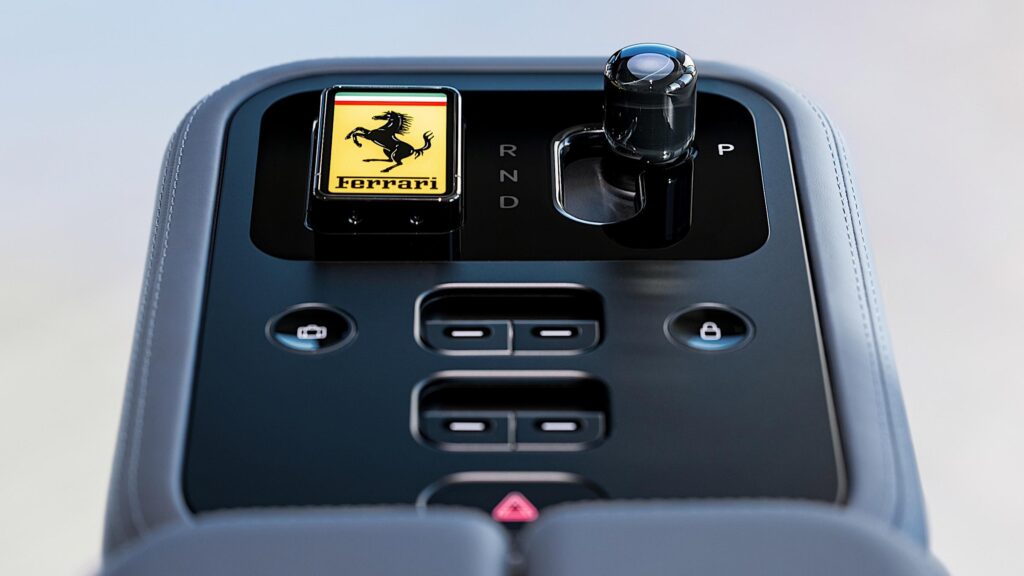
In an industry currently obsessed with removing physical buttons, LoveFrom has taken a contrarian approach. The Luce prioritizes visceral connection through high-quality mechanical feedback. The air vents close with a distinctive “snick,” the shifter moves through detents with satisfying resistance, and the steering wheel paddles offer a crisp, physical “pop.”
One standout feature is the windshield wiper control—a small dial on the steering wheel face. It utilizes a tiny lens to magnify one of four custom, 200-ppi OLED panels from Samsung. This allows the driver to see ornate, LoveFrom-designed icons with striking clarity. Similarly, the gauge cluster, or binnacle, employs two stacked OLED displays with a physical needle sandwiched between them, serving as a “pseudo-tachometer” that provides a mechanical soul to a car without a combustion engine.

For Ive and his partner Marc Newson, the Luce was a passion project rooted in their shared hobby of collecting vintage automobiles. Ive noted that modern cars often lack the physical connection found in classic Ferraris. The goal was to rediscover that “visceral” interface while navigating the strict safety regulations of the automotive industry—a process Ive described as both rewarding and, at times, frustratingly restrictive.
The centre of the dashboard features a 10.12-inch OLED screen, uniquely perforated to allow chunky toggle switches and a glass volume knob to pass through the display itself. The entire central control panel can be pivoted and swivelled using a large handle, allowing the driver to customize the ergonomics of the interface.
While the Luce’s precision and refinement may lack the “raw” feel of a traditional petrol-powered Ferrari, it signals a shift toward a new era of luxury. The full reveal of the Luce, including its exterior styling and pricing, is expected in May 2026. For LoveFrom and Ferrari, the project is as much about the final product as it is about the lessons learned in merging the worlds of silicon and steel.
