

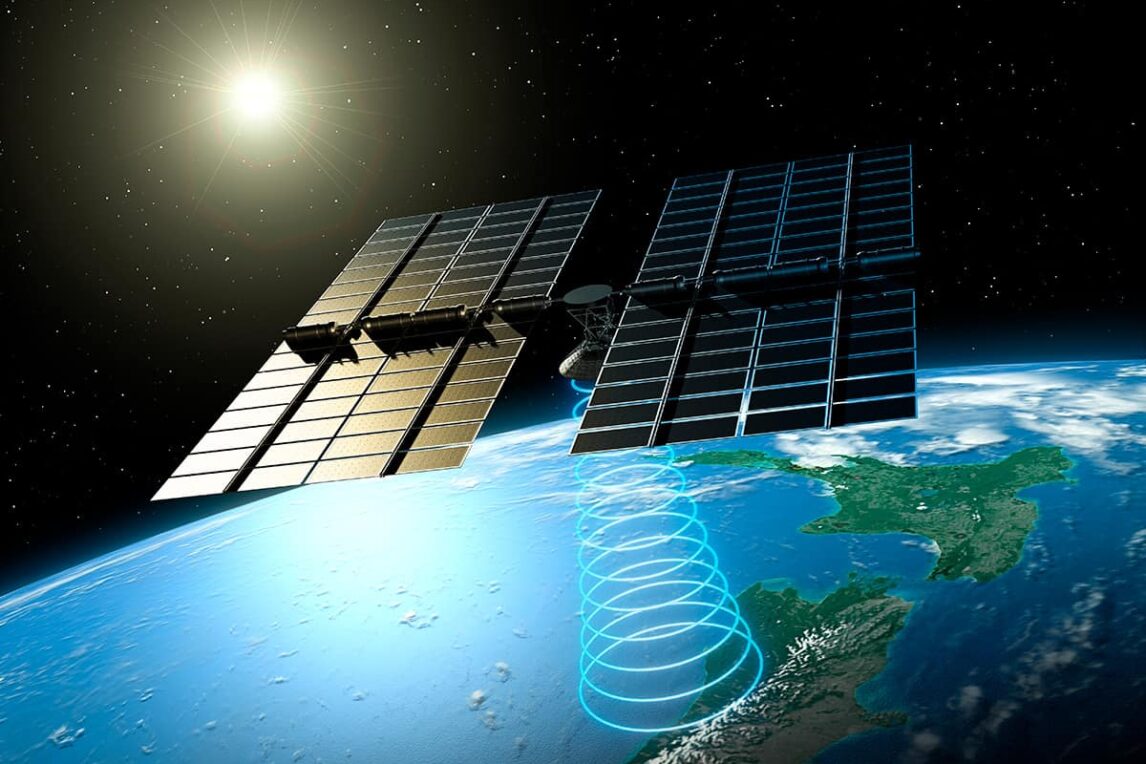
Scientists have achieved a significant breakthrough in the concept of transmitting solar energy from space. The idea of space-based solar power dates back to 1968 when NASA engineer Peter Glaser proposed the concept of a solar-powered satellite. More than five decades later researchers from Caltech have successfully carried out an experiment.
Read: Huawei FreeLace Review: Quirky tunes, questionable beats
Their space-borne prototype, the Space Solar Power Demonstrator (SSPD-1), collected sunlight, converted it into electricity, and beamed it to microwave receivers on a rooftop at Caltech’s Pasadena campus. This achievement not only demonstrates the feasibility of wireless energy transfer in space but also proves the prototype’s ability to withstand the harsh conditions of the space environment.
Ali Hajimiri, professor of electrical engineering and co-director of Caltech’s Space Solar Power Project (SSPP), highlighted the significance of their accomplishment. Using flexible lightweight structures and integrated circuits of their own, the team achieved wireless energy transfer in space, a feat that had not been demonstrated before, even with expensive rigid structures.
The experiment, known as the Microwave Array for Power-transfer Low-orbit Experiment (MAPLE), is one of three research projects conducted as part of SSPD-1. It involved two receiver arrays, lightweight microwave transmitters with custom chips, and a transmission setup designed to minimize fuel requirements for space travel. The flexible design allowed the transmitters to be folded up onto a rocket.
Space-based solar power has long been a sought-after goal, offering the potential for unlimited renewable energy. Solar panels in space can collect sunlight continuously, irrespective of the time of day, providing a constant energy source. Transmitting power via microwaves also eliminates the interference caused by cloud cover.

Caltech’s SSPD is not the only initiative pursuing space-based solar power. Japan’s space agency, JAXA, recently announced a public-private partnership aimed at transmitting solar power from space by 2025. Another breakthrough in Japan occurred in 2015 when JAXA scientists successfully transmitted 1.8 kilowatts of power wirelessly over a distance of more than 50 meters.
Founded in 2011, the Space Solar Power Project at Caltech conducts various experiments alongside MAPLE. These experiments include evaluating the effectiveness of different cell types in surviving space conditions and a deployment experiment called DOLCE (Deployable on-Orbit ultraLight Composite Experiment). DOLCE is a six-by-six-foot structure that showcases the architecture, packaging scheme, and deployment mechanisms of modular spacecraft, although it has yet to be deployed.
These advancements in space-based solar power hold immense potential for providing clean and abundant renewable energy. The progress made by Caltech and other research initiatives brings us closer to harnessing the sun’s energy from space and revolutionizing our approach to power generation.
