

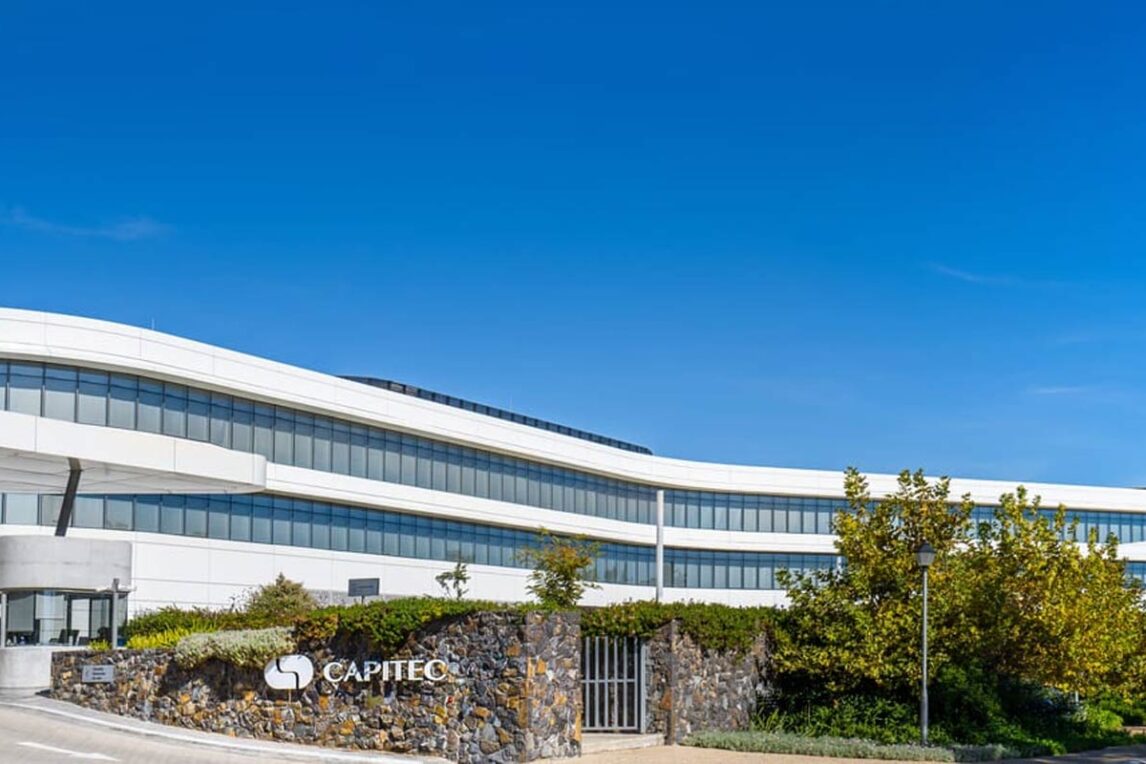
Capitec Bank has reported a 19 percent increase in group headline earnings to R9.5 billion for the six months ending 31 August 2026, supported by rapid expansion across its digital ecosystem and non-interest income channels. The bank raised its interim dividend by 19 percent to 3 110 cents per share.
Read: Bandwidth Blog & Smile 90.4FM Tech Tuesday: Rogue AI!
A primary driver of performance was the group’s value-added services (VAS) and fintech operations, which contributed R2.7 billion to headline earnings, representing roughly three-quarters of traditional personal banking profits. Combined net income from value-added services and Capitec Connect expanded 32 percent to R3.8 billion, reflecting robust client engagement across mobile, digital payments, and cash transfer services.
Capitec Connect, the bank’s mobile virtual network operator (MVNO) operating on Cell C’s network, delivered a 72 percent surge in net income to R284 million. Active subscribers reached 1.8 million, up from 1.1 million in the prior period, while data consumption more than doubled to 34.3 petabytes. The MVNO’s growth was bolstered by product enhancements, including free Capitec-to-Capitec voice calls and an increase in maximum airtime advance limits to R100.
Digital payment adoption accelerated simultaneously. Users of mobile contactless wallets, including Apple Pay, Google Pay, and Samsung Pay, grew 68 percent to 2.4 million clients, driving R52.1 billion in spend. Capitec’s banking app client base reached 16.5 million users, while its enterprise checkout engine, Capitec Pay, processed 182 million transactions worth R45 billion, yielding a 51 percent increase in net income to R365 million.
Despite holding banking fees flat for a second consecutive year, net transaction and commission income grew 20 percent to R12.2 billion, driven by a 14 percent increase in transaction volumes and higher card processing volume rebates. Net non-interest revenue accounted for 70 percent of operating income after credit impairments, up from 65 percent. Operating expenses rose 5 percent to R10.5 billion, improving the bank’s cost-to-income ratio to 36 percent. Non-salary technology expenditure grew 8 percent to R1.7 billion, driven by a 27 percent increase in cloud infrastructure costs.

Group credit costs increased during the period, lifting the annualized credit loss ratio to 8.4 percent from 7.9 percent. In Personal Banking, the ratio rose to 9.2 percent, impacted by a higher forward-looking macroeconomic provision of R664 million. Capitec attributed the elevated credit risk environment to broader geopolitical conflict, inflationary pressures, and the South African Reserve Bank’s repo rate hike to 7 percent in May.
Business Banking headline earnings surged 52 percent to R609 million, though its credit loss ratio rose to 3.4 percent following a 175 percent expansion in unsecured automated credit lending. In line with its capital optimization strategy, Capitec also finalized an agreement in July to dispose of Capitec Rental Finance to a subsidiary of Sasfin Holdings.
