

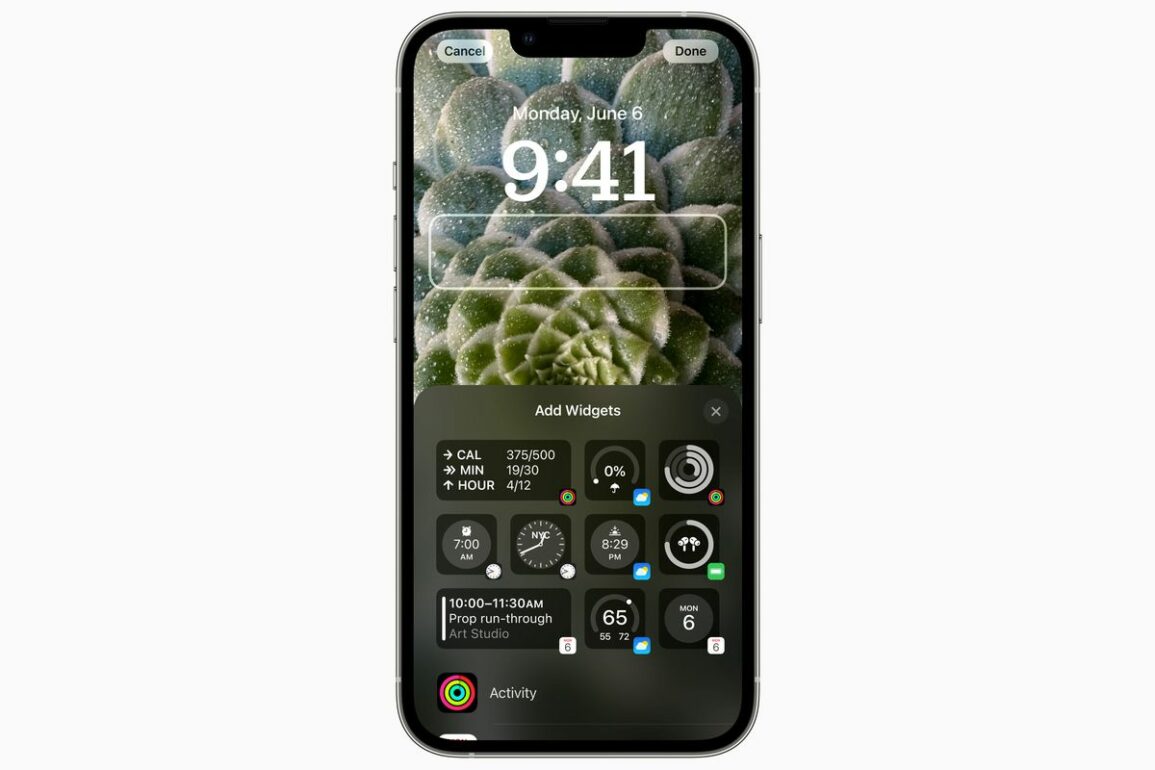
At its Worldwide Developer Conference (WWDC 2022) held this week, Apple has announced the new version of its mobile operating system iOS 16. As is the case every year, not all iPhones will be compatible with the new software. Some notable changes include a revamped lock screen with deeper customisation and integration with Focus Mode, less disruptive slide-in notifications, editing features for sent texts in the Messages app, and a shared iCloud library.
Read: The world’s fastest internet is now over 1 million Gbps
The following iPhone models will receive the software upgrade to iOS 16 when it is released to the public:
- iPhone 8 and 8 Plus (2017)
- iPhone X (2018)
- iPhone XS and XS Max (2018)
- iPhone XR (2018)
- iPhone 11 (2019)
- iPhone 11 Pro and Pro Max (2019)
- iPhone SE 2nd gen (2020)
- iPhone 12 and 12 Mini (2020)
- iPhone 12 Pro and Pro Max (2020)
- iPhone 13 and 13 Mini (2021)
- iPhone 13 Pro and Pro Max (2021)
- iPhone SE 3rd gen (2022)
That means more phones won’t get the update compared to previous iterations of the software. This includes the original iPhone SE, the iPhone 6 and 6S, as well as the iPhone 7. These phones were released between 2014 and 2016 – they received software support for a very long time.

There are various reasons for software updates not being rolled out to all devices. Most importantly, it comes down to hardware. The innards of the older phones just don’t have the grunt needed to run all of the new features brought to an ever larger software package.
iOS 16 is expected to launch alongside Apple’s next generation of flagship iPhones, likely the iPhone 14. Apple Developer Programme members can download and test iOS 16, and a public beta will be available to general users from July 2022.
