

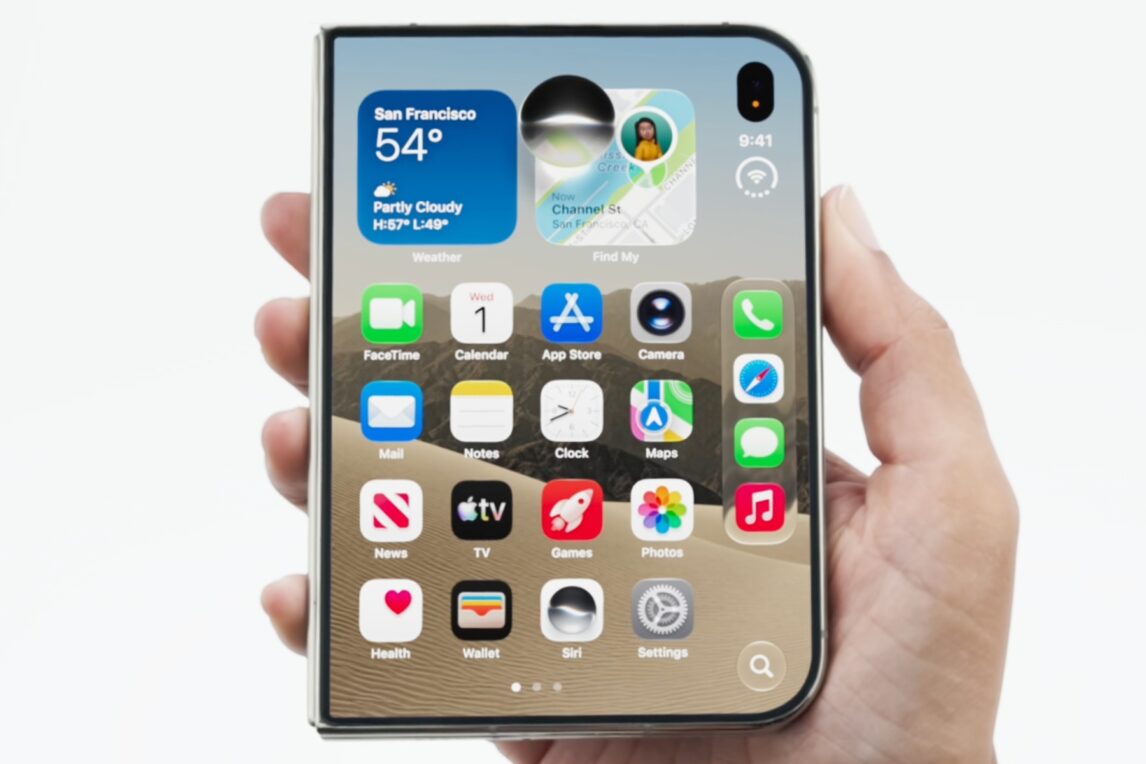
While the newly launched iPhone Duo represents Apple’s debut in the foldable market, early critical reception has highlighted the absence of Face ID as a key trade-off, with the company opting for a side-mounted Touch ID sensor instead. However, supply chain reports indicate Apple is already developing under-display Face ID technology for the device’s successor.
Read: Apple iPhone Duo launches in South Africa for up to R77,000
The decision to omit Face ID on the $2,000 (approx. R37,800 local equivalent pricing before taxes) foldable stems from chassis thickness constraints and multi-orientation usage requirements. Squeezing complex TrueDepth camera hardware into the device’s ultra-thin displays posed significant engineering challenges.
Furthermore, implementing Face ID across both internal and external screens would have added substantial cost and component complexity to an already high-end product. Apple prioritized hardware uniformity across both displays for the initial release, which also introduces the company’s first commercial under-display camera module.
According to industry insider Mark Gurman, Apple is actively testing prototypes of the iPhone Duo 2 featuring under-display Face ID integrated into the outer cover screen.
The transition builds on display advancements debuting across the broader lineup. The reduced Dynamic Island footprint on the flagship iPhone 18 Pro series demonstrates Apple’s ongoing progress in migrating optical sensors beneath the display panel.

Key expectations for the next-generation foldable include:
- Under-Display Biometrics: Facial recognition hidden beneath the outer screen, reducing reliance on capacitive fingerprint sensors.
- Action Button Integration: The programmable tactile button, first introduced on the iPhone 15 Pro range, is slated to join the foldable’s exterior button layout.
- Refined Display Profile: Improved internal component layering to maintain a slim chassis while expanding sensor capabilities.
While an official release timeline remains unconfirmed, prototype testing suggests Apple views Touch ID on foldables as a temporary stopgap rather than a permanent design choice.
