

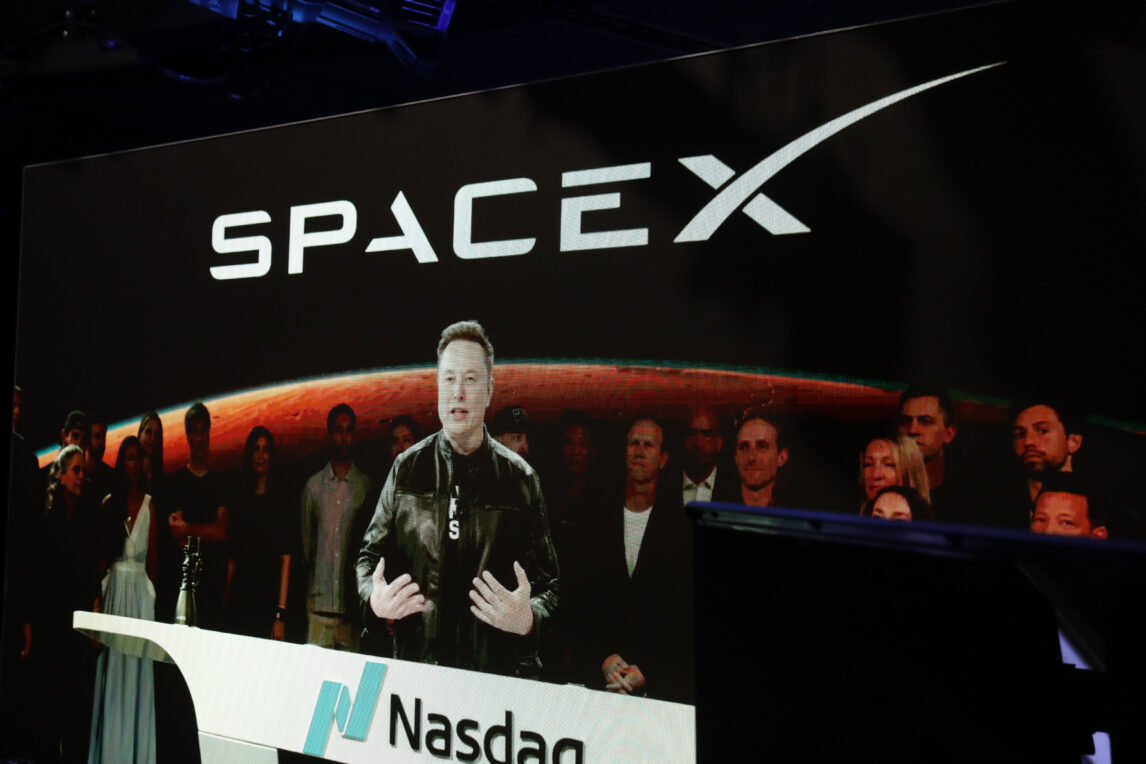
SpaceX has published its first quarterly earnings report since going public on June 12, posting strong top-line revenue growth and narrowing operating losses. Total Q2 revenue surged 92% year-over-year to $7.8 billion, while net losses were halved to $541 million, down from $1 billion during the same period last year.
Read: WalletDoc to be acquired by Capitec for R400 million
The financial breakdown offers an unprecedented look inside a major AI enterprise, highlighting the massive capital expenditure required to support next-generation compute infrastructure.
The company’s quarterly results were heavily shaped by rapid expansion in its AI division (formerly operating as xAI):
- Revenue Acceleration: The AI division generated $2.56 billion in revenue, up 247% year-over-year from $737 million, primarily driven by enterprise cloud services agreements.
- Narrowed Operating Loss: Operating losses for the division fell to $1.25 billion, down from $1.54 billion a year ago.
- Infrastructure Capex Surge: Capital expenditures for the AI unit spiked 2,013% year-over-year to $15.8 billion for the quarter to fund massive data centre expansion. By contrast, SpaceX spent $1.17 billion on capital expenditures for its core rocket launch and hardware operations.

SpaceX’s disclosure provides rare financial visibility into the tier-one AI market, where the company competes alongside OpenAI, Google, and Anthropic:
- Anchor Compute Contracts: Top-line growth was anchored by long-term data centre deals, including an agreement with Anthropic to pay $1.25 billion per month through May 2029 to access compute capacity at SpaceX’s Colossus 1 facility.
- Upcoming Cursor Integration: SpaceX is slated to close its acquisition of AI developer platform Cursor during the current quarter, a transaction expected to influence the division’s ongoing costs and product roadmap.
