

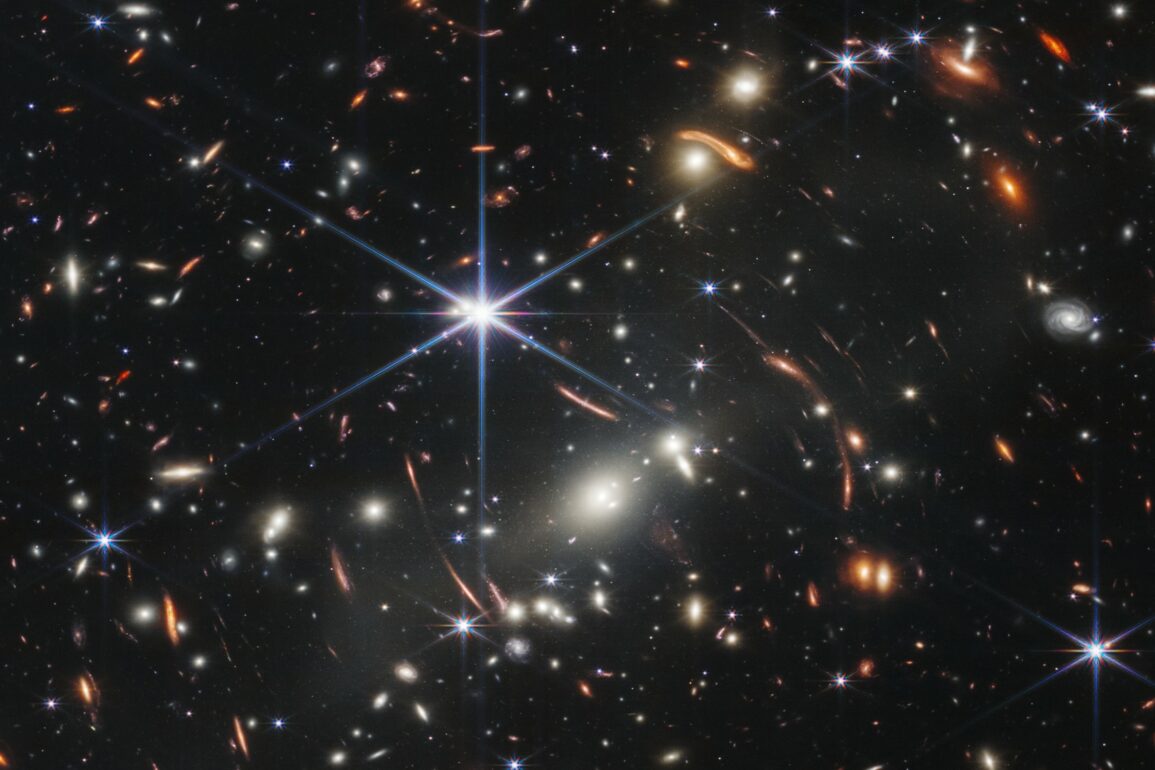
After successfully launching on Christmas Day last year, the James Webb Space Telescope (JWST) reached its final orbit in January this year. Now, the JWST has kicked off a new era of seeing deeper into the universe than ever before. The first high-quality, research-focused image captured by the $10 billion James Webb Space Telescope has been revealed. It is our deepest infrared view of the universe to date and was created with just 12.5 hours of observation time on one of the four main instruments, according to a NASA statement.
Read: The Human Horizons HiPhi Z has ‘light curtains’ and a robotic arm
“Today represents an exciting new chapter in the exploration of our universe,” the White House said. “From the beginning of history, humans have looked up to the night sky with wonder and thanks to dedicated people who have been working for decades in engineering and on scientific marvels, we can look to the sky with new understanding.”
The image is known as SMACS 0723, which marks a galaxy so massive that it bends and magnifies light coming from objects in space behind it as seen by the observatory. The combination of JWST’s high-powered observing capabilities and the effect of gravitational lensing means that this image is the deepest infrared view of the universe that humans have seen to date.
“If you held a grain of sand on the tip of your finger at arm’s length, that is the part of the universe that you’re seeing, just one little speck of the universe,” according to NASA Administrator Bill Nelson.
Next up, the JWST has a special slate of other early science to complete by its first anniversary in space. These observations cover everything from Jupiter to galaxy formation in the early universe and are designed to help scientists learn how to use JWST’s data most effectively.
“A hundred years ago, we thought there was only one galaxy,” Nelson said. “Now the number is unlimited.”
